
Introduction
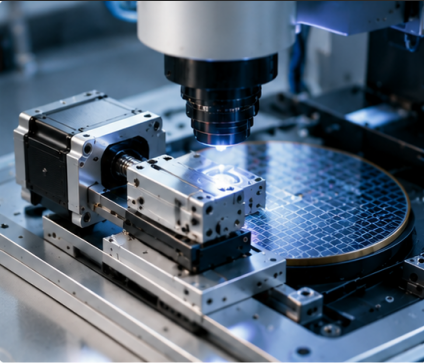
Hybrid stepper motors improve the accuracy of automated dispensing equipment by providing precise positioning, stable motion control, and repeatable performance for dispensing operations. They are widely used in glue dispensing machines, adhesive dispensing systems, solder paste dispensers, and precision fluid handling equipment where accurate movement directly affects product quality.
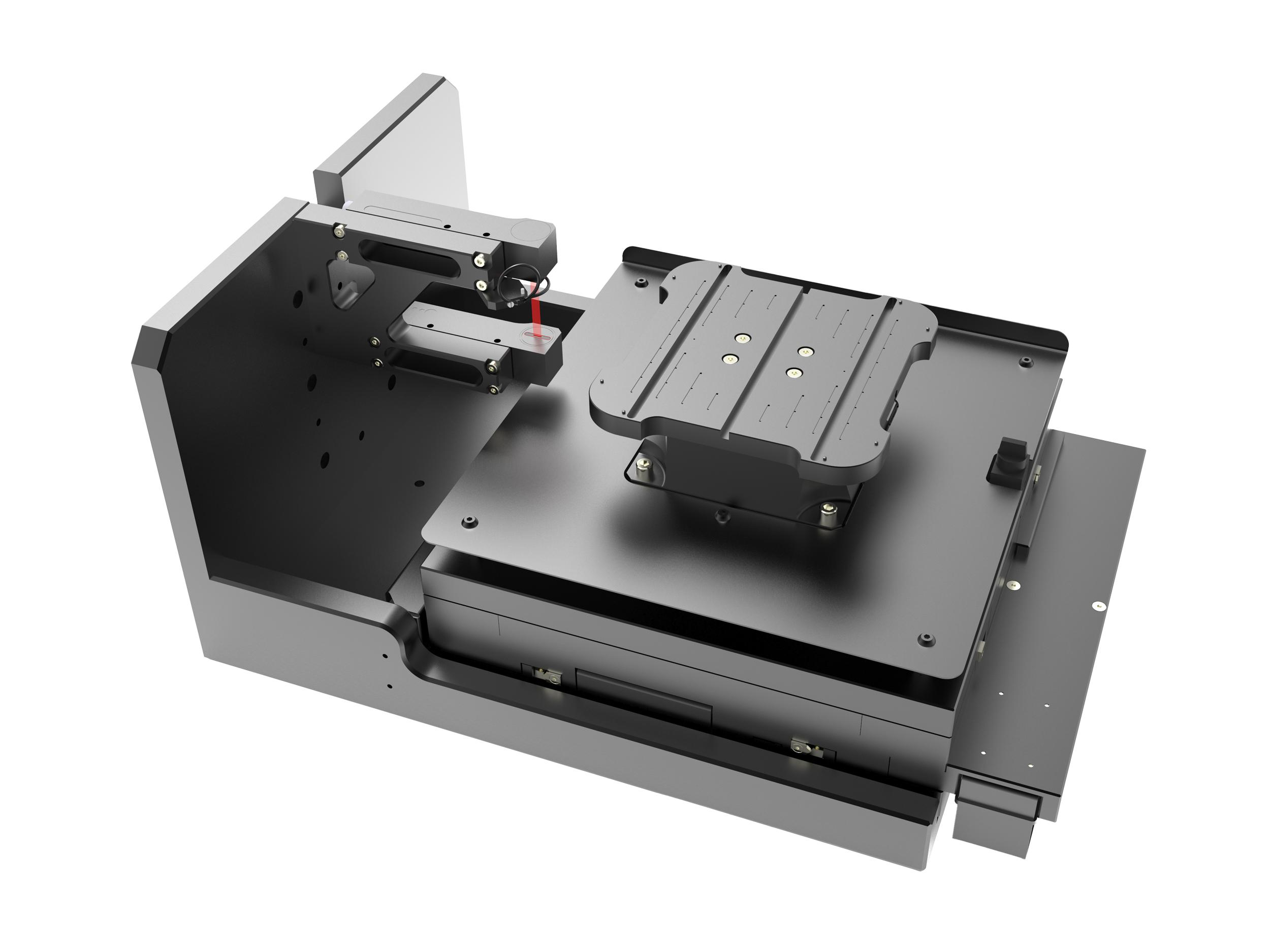
In automated dispensing systems, the motor controls critical movements such as X/Y axis positioning, dispensing head movement, nozzle height adjustment, and material feeding. A reliable motion system helps manufacturers maintain consistent dispensing paths, reduce production errors, and improve production efficiency.
With the increasing demand for smaller electronic components, higher assembly precision, and automated manufacturing processes, hybrid stepper motors have become an important motion solution for dispensing equipment that requires accurate positioning, high torque output, and reliable operation.
What Is a Hybrid Stepper Motor?
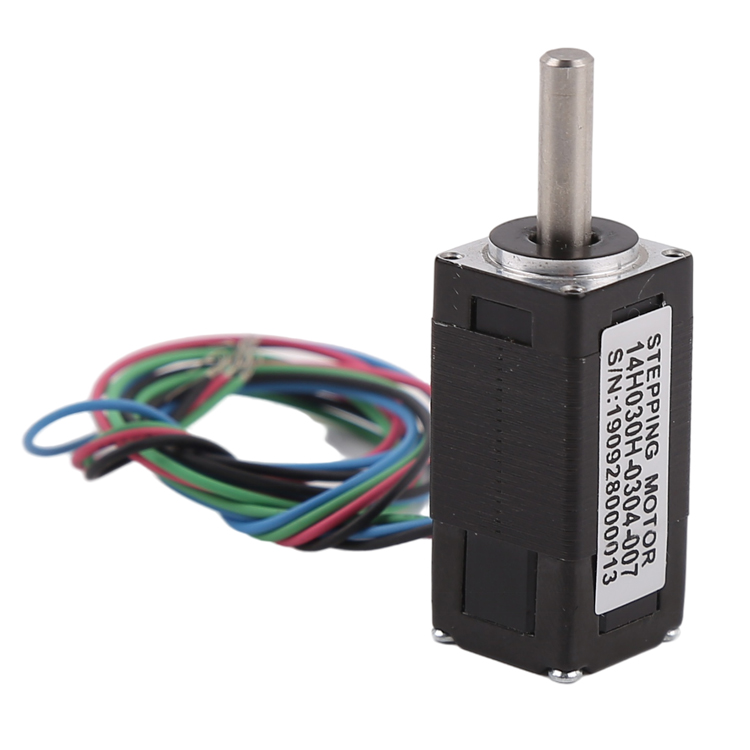
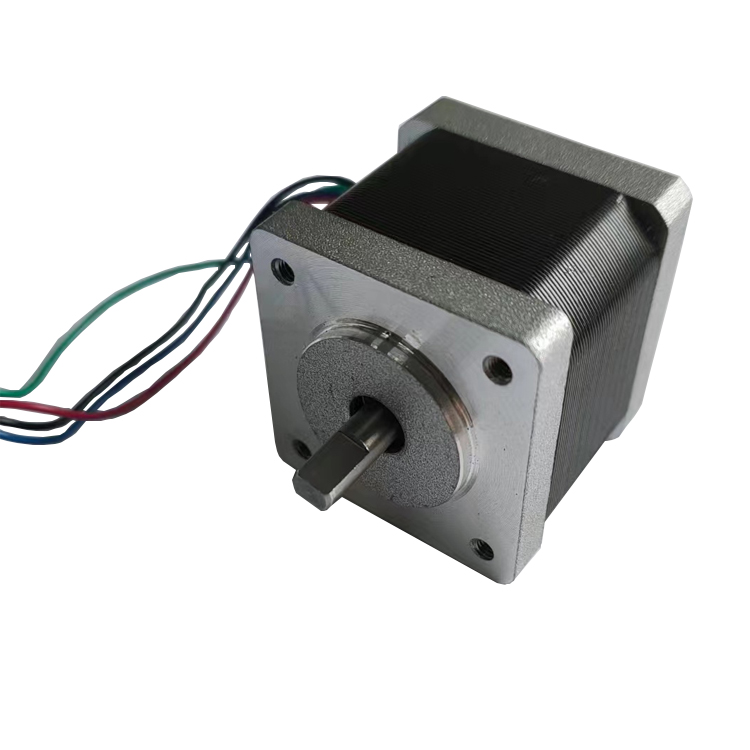
A hybrid stepper motor is a precision motion motor that combines the advantages of permanent magnet and variable reluctance stepper motor technologies. It uses a toothed rotor and stator structure to achieve accurate angular movement through controlled electrical pulses.
Unlike a traditional DC motor that rotates continuously, a hybrid stepper motor moves in fixed steps. Each pulse signal sent from the driver corresponds to a specific movement angle, allowing accurate position control without requiring a feedback system in many applications.
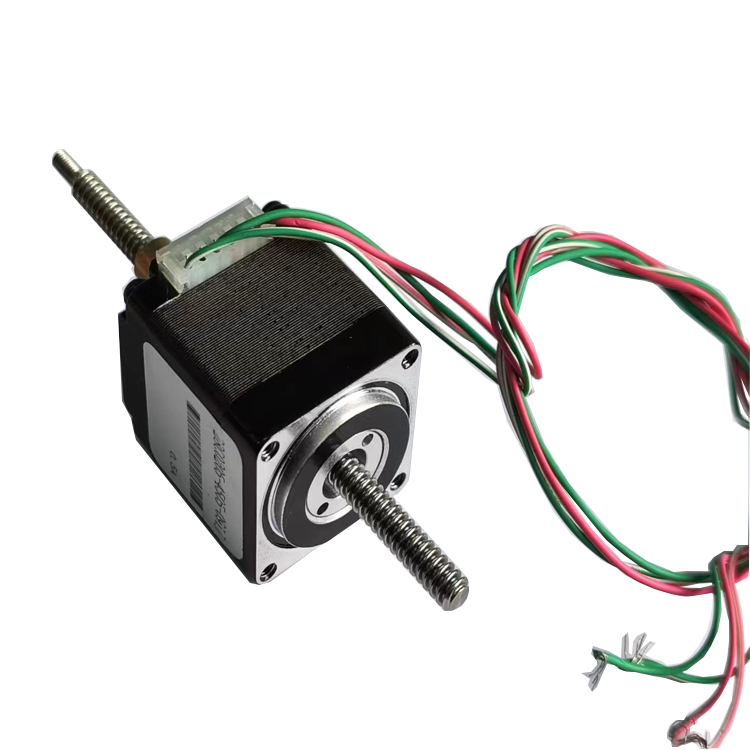
A typical hybrid stepper motor system includes:
- Hybrid stepper motor:Generates controlled rotational movement.
- Motor driver:Controls current and pulse signals.
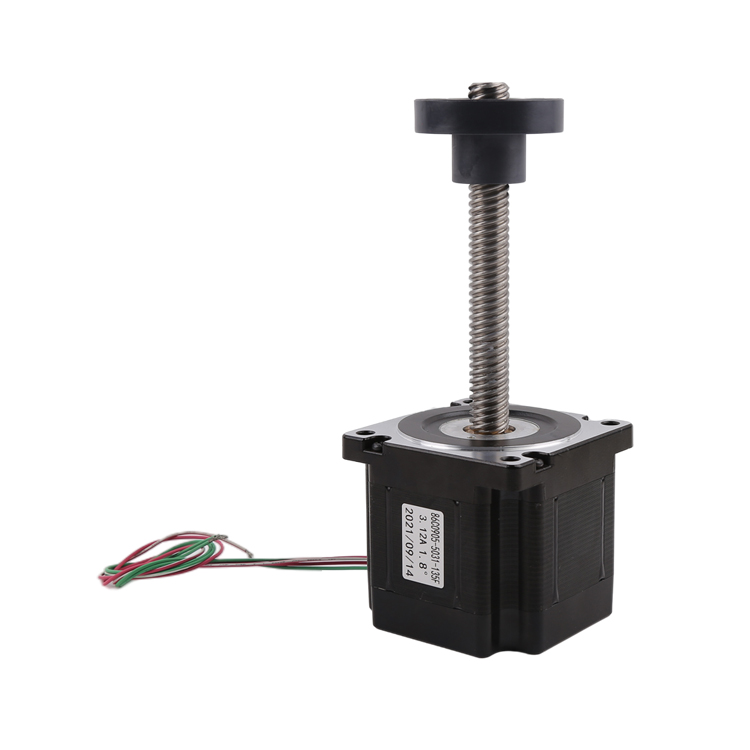
- Mechanical transmission system:Converts rotary motion into linear movement through belts, lead screws, or ball screws.
Motion controller: Defines position, speed, and acceleration parameters.
In automated dispensing equipment, this precise control allows the dispensing nozzle to follow programmed paths accurately and maintain consistent application results.
Why Automated Dispensing Equipment Requires Accurate Motion Control
Automated dispensing machines are used in industries including electronics manufacturing, automotive components, medical devices, and consumer products.
Common dispensing processes include:
- Adhesive dispensing
- Epoxy dispensing
- Solder paste application
- Sealant dispensing
- Lubricant dispensing
The final dispensing quality depends heavily on motion accuracy.
Important motion requirements include:
- Accurate positioning
- Repeatable movement
- Stable speed control
- Precise nozzle height adjustment
- Smooth acceleration and deceleration
Small positioning errors may result in:
- Incorrect adhesive placement
- Uneven material distribution
- Component bonding problems
- Increased production waste
For this reason, selecting the right motion component is critical. Hybrid stepper motors provide a practical solution for dispensing equipment that requires reliable positioning without the complexity of advanced servo systems.
Applications of Hybrid Stepper Motors in Dispensing Equipment
X/Y Axis Positioning Systems
The X/Y positioning system is one of the most common applications for hybrid stepper motors in dispensing machines.
The motor controls the movement of:
- Dispensing platforms
- Workpiece fixtures
- Dispensing heads
- Inspection mechanisms
In PCB adhesive dispensing equipment, for example, the hybrid stepper motor moves the dispensing nozzle according to programmed coordinates, ensuring accurate adhesive placement on electronic components.
Key requirements include:
- High repeatability
- Smooth movement
- Stable operation
- Accurate path control
Z-Axis Dispensing Head Adjustment
The vertical position of the dispensing nozzle directly affects material application quality.
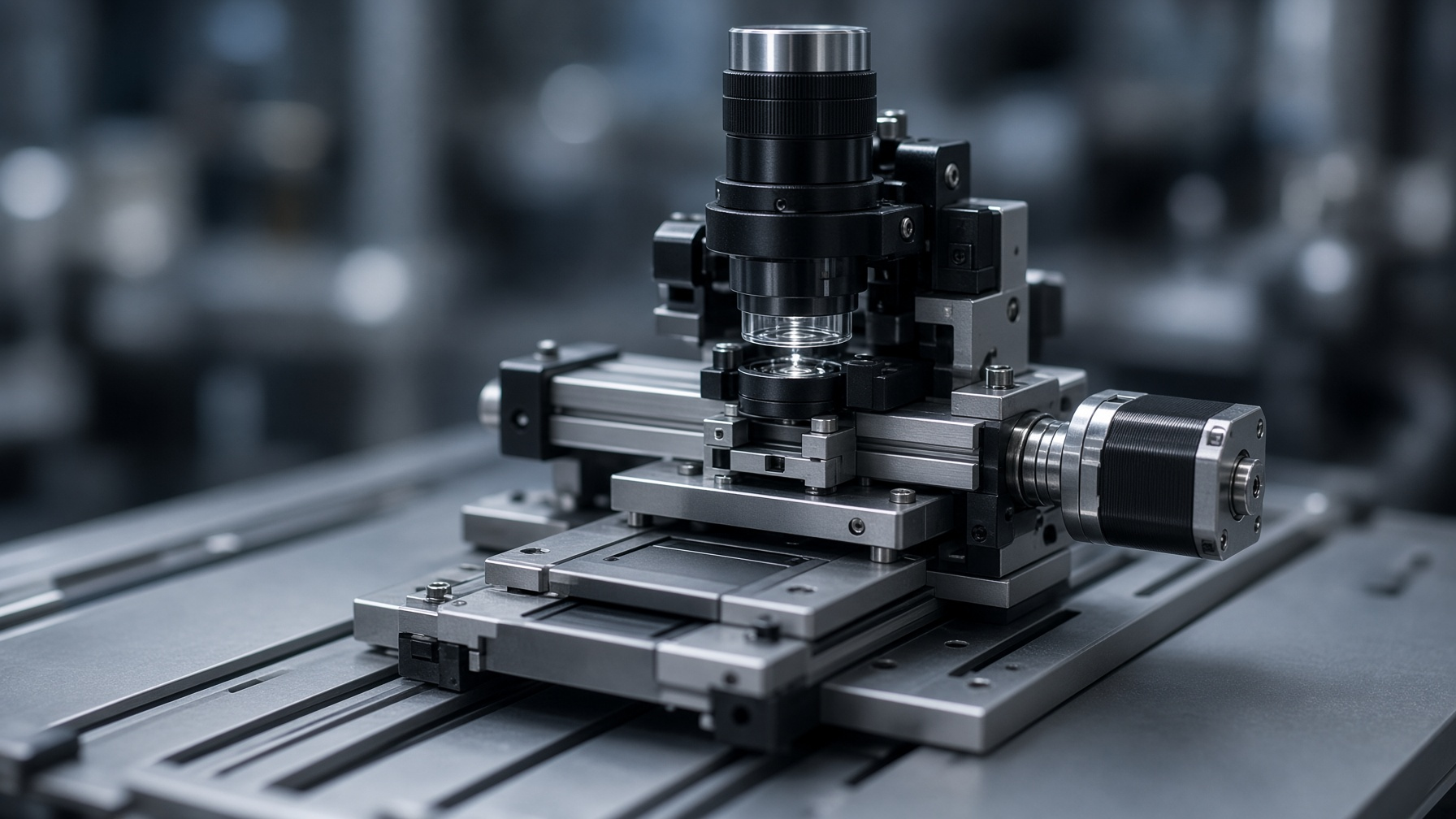
Hybrid stepper motors are commonly used for:
- Nozzle height adjustment
- Dispensing head lifting systems
- Vertical positioning mechanisms
Advantages include:
- Precise height control
- High holding torque
- Stable positioning under load
This is especially important when dispensing materials onto components with different surface heights.
Material Feeding Mechanisms
Some dispensing systems require controlled material delivery. Hybrid stepper motors are often used in feeding mechanisms because they can provide accurate incremental movement.
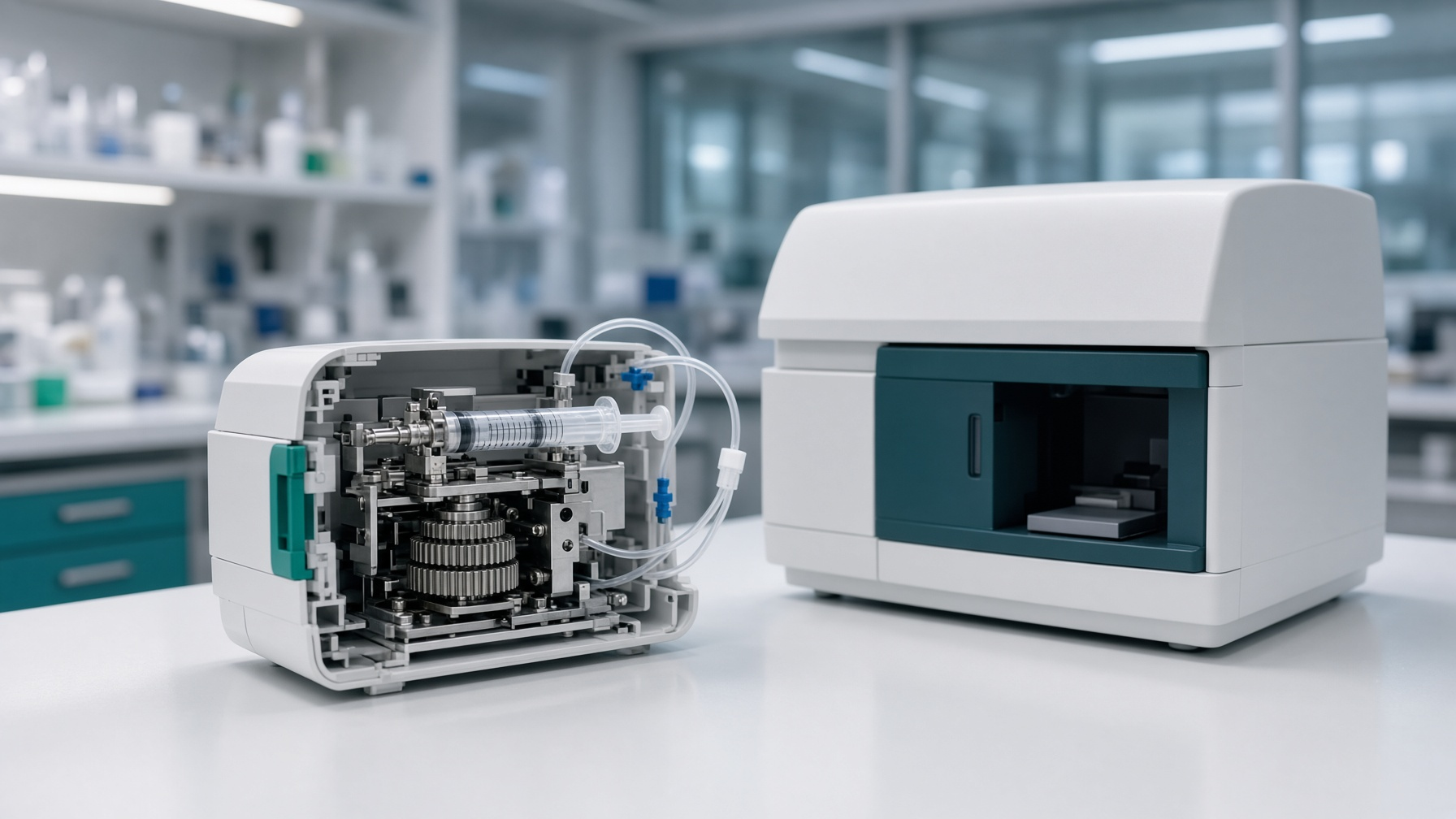
Applications include:
- Syringe pumps
- Screw dispensing systems
- Valve control mechanisms
The motor helps control:
- Material flow rate
- Feeding distance
- Dispensing consistency
Advantages of Hybrid Stepper Motors in Dispensing Machines
Precise Position Control
The biggest advantage of hybrid stepper motors is accurate step-based movement.
Compared with simple rotary motors, they provide:
- Repeatable positioning
- Easy pulse-based control
- Stable low-speed operation
These features make them suitable for dispensing applications where movement accuracy directly impacts product quality.
High Holding Torque
Dispensing machines often require the motor to maintain position while handling mechanical loads.
Hybrid stepper motors provide strong holding torque, which helps:
- Prevent unwanted movement
- Keep the dispensing head stable
- Maintain nozzle alignment
Simple Integration with Automation Systems
Hybrid stepper motors are widely used because they can be easily integrated with industrial controllers.
Common control methods include:
- Pulse and direction signals
- PLC systems
- Motion control boards
Compared with servo systems, they usually require fewer components and simpler setup.
Hybrid Stepper Motor Selection Guide for Dispensing Equipment
Choosing the correct motor requires evaluating the mechanical requirements of the dispensing system.
| Parameter | Description | Importance in Dispensing Applications |
| Holding Torque | Maximum torque when stationary | Determines load handling capability |
| Rated Current | Required operating current | Affects driver selection and heat generation |
| Step Angle | Movement resolution per step | Influences positioning accuracy |
| Speed Range | Maximum operating speed | Affects production cycle time |
| Motor Size | Frame dimensions | Determines machine integration |
| Rotor Inertia | Resistance to speed change | Affects acceleration performance |
| Accuracy | Positioning capability | Impacts dispensing consistency |
Important Factors Engineers Should Consider
Before selecting a hybrid stepper motor, engineers should evaluate:
- Load requirement:Calculate the force required to move the dispensing head or platform.
- Movement distance:Determine the required travel range.
- Operating speed:Match motor speed with production requirements.
- Positioning accuracy:Select suitable motor resolution and mechanical transmission.
- Working environment:Consider temperature, dust, vibration, and operating hours.
- Driver compatibility:Ensure the motor matches the control system.
Hybrid Stepper Motor vs Servo Motor in Dispensing Equipment
Both hybrid stepper motors and servo motors are used in automated dispensing machines, but they are suitable for different requirements.
| Feature | Hybrid Stepper Motor | Servo Motor |
| Control Method | Open-loop pulse control | Closed-loop feedback control |
| Position Feedback | Usually not required | Required |
| Accuracy | Suitable for many precision applications | Higher accuracy |
| System Complexity | Simple | More complex |
| Cost | Lower | Higher |
| Low-Speed Performance | Excellent | Good |
| High-Speed Response | Moderate | Excellent |
For many dispensing applications with moderate speed and high repeatability requirements, hybrid stepper motors provide an effective balance between performance and system cost.
How to Improve Dispensing Accuracy with Hybrid Stepper Motors
Motor selection is only one part of achieving accurate dispensing performance. The entire motion system design also affects final results.
Optimize Mechanical Design
Engineers should consider:
- Reducing mechanical backlash
- Improving mounting rigidity
- Selecting suitable lead screws or linear guides
- Minimizing vibration
Adjust Motion Parameters
Proper motor settings can improve performance:
- Optimize acceleration and deceleration
- Select appropriate current settings
- Avoid excessive operating speeds
- Use suitable microstepping control
Perform Regular Calibration
Calibration helps maintain:
- Position accuracy
- Dispensing consistency
- Equipment reliability
Future Trends of Hybrid Stepper Motors in Dispensing Automation
As manufacturing processes become more precise, dispensing equipment continues to require improved motion solutions.
Future hybrid stepper motor developments include:
- Higher torque density designs
- Integrated encoder feedback
- Improved thermal performance
- More compact motor structures
- Intelligent motion control systems
These improvements will help dispensing machines achieve
higher accuracy and better production efficiency.
Frequently Asked Questions About Hybrid Stepper Motors
1. Why are hybrid stepper motors used in dispensing machines?
Hybrid stepper motors provide accurate positioning, stable low-speed operation, and repeatable motion control, making them suitable for dispensing head movement, platform positioning, and material feeding systems.
2. What are the advantages of hybrid stepper motors compared with standard stepper motors?
Hybrid stepper motors use an improved rotor and stator structure, providing higher torque output, better positioning performance, and improved operating stability.
3. Can hybrid stepper motors achieve the accuracy required for precision dispensing?
Yes. When combined with suitable mechanical components such as precision lead screws and linear guides, hybrid stepper motors can meet the accuracy requirements of many automated dispensing applications.
4. Should I choose a hybrid stepper motor or servo motor for a dispensing machine?
The choice depends on application requirements. Hybrid stepper motors are suitable for many medium-speed positioning applications, while servo motors are better for high-speed systems requiring advanced feedback control.
5. How do I select the right hybrid stepper motor for dispensing equipment?
Selection should consider torque requirements, load, speed, step resolution, motor size, driver compatibility, and operating environment.
6. Can hybrid stepper motors be customized for dispensing equipment?
Yes. Motor manufacturers can customize frame size, torque specifications, shaft design, winding parameters, and mounting structures according to equipment requirements.
Key Takeaways
- Hybrid stepper motorsprovide accurate positioning and repeatable motion control for automated dispensing equipment.
- They are widely used in X/Y positioning systems, Z-axis adjustment mechanisms, and material feeding applications.
- High holding torque and precise step control help maintain consistent dispensing paths and improve manufacturing reliability.
- Compared with servo systems, hybrid stepper motors offer simpler control integration and cost advantages for many medium-speed precision applications.
- Proper motor selection requires evaluating torque, speed, resolution, load conditions, driver compatibility, and operating environment.
- Customized hybrid stepper motor solutions can help equipment manufacturers improve machine performance and meet specific dispensing requirements.
Conclusion
Hybrid stepper motors are an important motion solution for automated dispensing equipment because they provide accurate positioning, reliable torque output, and stable operation. From PCB adhesive dispensing to industrial fluid application systems, these motors help manufacturers achieve consistent processes and improve production quality.
As automation technology continues to advance, dispensing equipment requires increasingly precise and reliable motion components. Selecting the right hybrid stepper motor based on application requirements can improve machine efficiency, reduce maintenance needs, and simplify system design.
Welcome to contact us for customized stepper motor solutions. We provide professional support for motor selection, design optimization, and application-specific motion systems.