
Introduction: The Growing Role of Micro Geared Stepper Motors in Humanoid Robotics
Humanoid robots are becoming one of the most promising technologies in robotics, combining artificial intelligence, mechanical engineering, and advanced motion control systems. To achieve human-like movements, these robots require compact, precise, and reliable actuation solutions. Among various motion components, the micro geared stepper motor has become an important driving technology for humanoid robot applications.

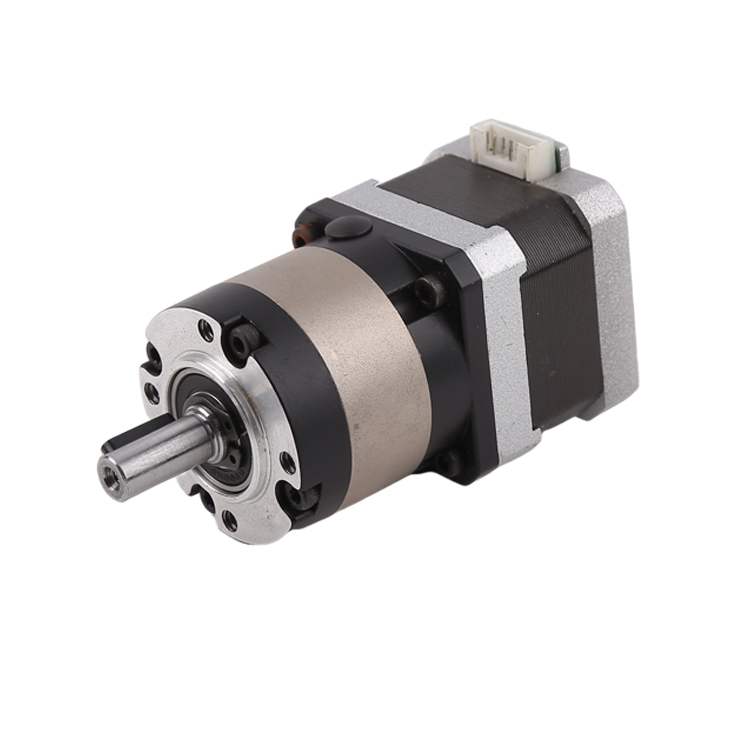
A micro geared stepper motor integrates a miniature stepper motor with a precision reduction gearbox, providing higher torque output, accurate positioning, and excellent motion control in a compact structure. These advantages make it suitable for applications where installation space is limited but high precision and stability are required.
From robotic fingers and wrists to joints and facial mechanisms, micro geared stepper motors help humanoid robots achieve smoother, more flexible, and more natural movements. As humanoid robots continue to evolve toward commercial and industrial applications, demand for
high-performance miniature motion solutions is increasing rapidly.
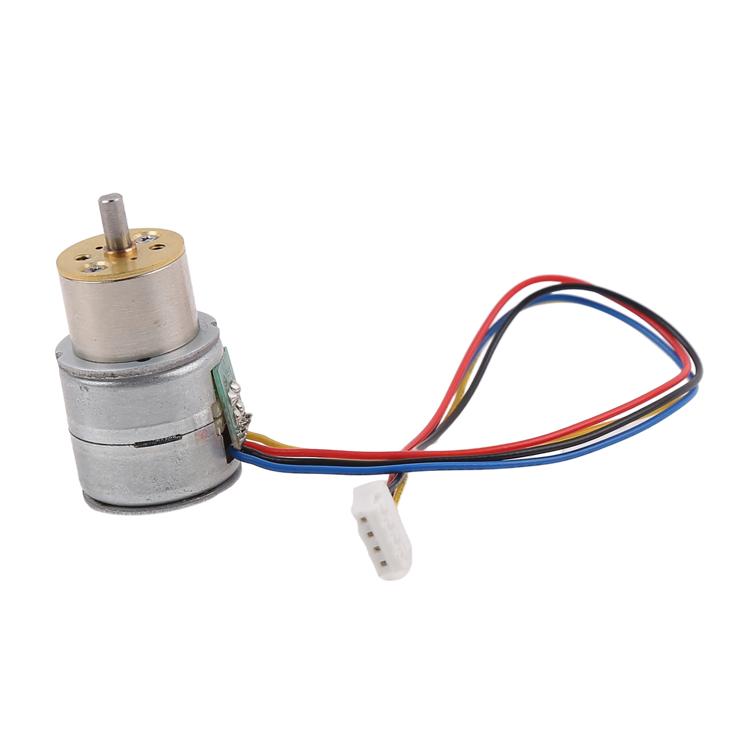
What Is a Micro Geared Stepper Motor?
A micro geared stepper motor is a small-sized stepper motor combined with a gearbox that reduces speed while increasing output torque. Unlike traditional motors that directly deliver high-speed rotation, the geared structure allows precise control of movement with improved
mechanical efficiency.
A typical micro geared stepper motor consists of three main components:
1. Miniature Stepper Motor
The stepper motor converts electrical pulses into precise angular movement. Each input pulse corresponds to a specific rotation angle, allowing accurate position control without complex feedback systems.
2. Precision Gear Reduction System
The gearbox increases torque by reducing output speed. Planetary gears, spur gears, and other precision reduction mechanisms are commonly used depending on the application requirements.
3. Control Electronics
Motor drivers regulate current and pulse signals, enabling smooth acceleration, precise positioning, and stable operation.
This combination makes the micro geared stepper motor an ideal actuator for robotic systems that require controlled and repeatable motion.
Why Humanoid Robots Need Micro Geared Stepper Motors
Humanoid robots are designed to imitate human movement. Unlike industrial robots with fixed repetitive motions, humanoid robots need flexible motion, compact structures, and precise control across many degrees of freedom.
Modern humanoid robots may contain dozens of actuated joints, including shoulders, elbows, wrists, fingers, knees, and ankles. Each joint requires an actuator that can provide accurate movement while maintaining low weight and energy efficiency.
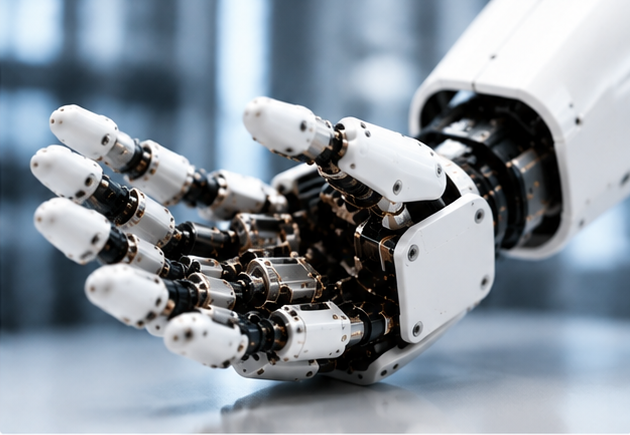
The key advantages of micro geared stepper motors in humanoid robots include:
1. High Precision Motion Control
Precision is one of the most important requirements in humanoid robotics. Robots need accurate positioning to perform tasks such as grasping objects, interacting with humans, and maintaining balance.
Because stepper motors operate through controlled pulse signals, they can achieve precise incremental movement. When combined with a reduction gearbox, the motor can deliver higher resolution and smoother motion.
This makes micro geared stepper motors especially suitable for:
- Robotic fingers
- Wrist rotation systems
- Small joint mechanisms
- Human-machine interaction devices
2. Compact Size for Space-Limited Robot Design
Humanoid robots require compact mechanical structures because their body dimensions are similar to humans. Large motors increase weight and reduce energy efficiency.
The small size of a micro geared stepper motor allows engineers to integrate motors into narrow spaces such as:
- Robot hands
- Finger joints
- Neck mechanisms
- Facial expression modules
Miniaturization is especially important for dexterous robotic hands, where multiple motors may need to be installed within a limited space.
3. Higher Torque Output Through Gear Reduction
One challenge of miniature motors is limited torque output. A reduction gearbox solves this problem by increasing output torque while maintaining a compact motor size.
For humanoid robots, higher torque is necessary for:
- Lifting objects
- Maintaining joint positions
- Controlling arm movements
- Performing precise gripping operations
A micro geared stepper motor provides the balance between compact design and sufficient mechanical power.
Applications of Micro Geared Stepper Motors in Humanoid Robots
1. Robotic Hands and Finger Actuation
One of the most important applications of micro geared stepper motors is humanoid robotic hands.
Human hands have complex movements involving multiple joints and muscles. To replicate these abilities, robotic fingers require small actuators capable of precise movement.
Micro geared stepper motors can be used for:
- Finger bending and extension
- Object gripping
- Fine manipulation tasks
- Tool operation
For example, a humanoid robot designed for household assistance may need to pick up fragile objects such as cups, electronic components, or medical equipment. Precise motor control is essential to avoid excessive force.
2. Wrist and Arm Joint Systems
Humanoid robot arms require smooth and controlled movement for interaction with the environment.
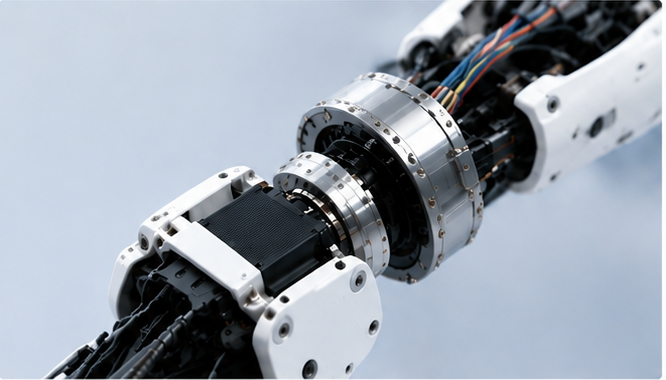
Micro geared stepper motors can provide:
- Accurate rotation control
- Stable torque output
- Compact installation
They are suitable for wrist rotation, elbow adjustment, and small arm mechanisms where traditional motors may be too large or inefficient.
3. Facial Expression and Head Movement Mechanisms
Future humanoid robots are expected to interact naturally with humans. Facial expressions, eye movement, and head positioning play an important role in communication.
Micro geared stepper motors can drive:
- Eye movement systems
- Mouth mechanisms
- Neck rotation
- Facial expression components
Their small dimensions and precise positioning ability make them suitable for creating realistic robotic expressions.
4. Educational and Research Humanoid Robots
Research institutions and universities often require compact and affordable robotic platforms.
Micro geared stepper motors are widely used in:
- Prototype humanoid robots
- Robotics education platforms
- Experimental robotic joints
Their simple control method and reliable positioning performance make them suitable for developing new robotic motion algorithms.
Micro Geared Stepper Motor vs Traditional Motors in Humanoid Robots
When selecting actuators for humanoid robots, engineers compare different motor technologies.
| Motor Type | Advantages | Limitations |
| Micro Geared Stepper Motor | Precise positioning, compact size, high torque output | Lower efficiency at high speeds |
| Brushless DC Motor | High efficiency, fast response | Requires complex control systems |
| Servo Motor | Closed-loop accuracy | Larger size and higher cost |
| Standard Stepper Motor | Simple control | Limited torque without gearing |
For many small robotic mechanisms, the micro geared stepper motor offers an excellent combination of precision, size, and cost efficiency.
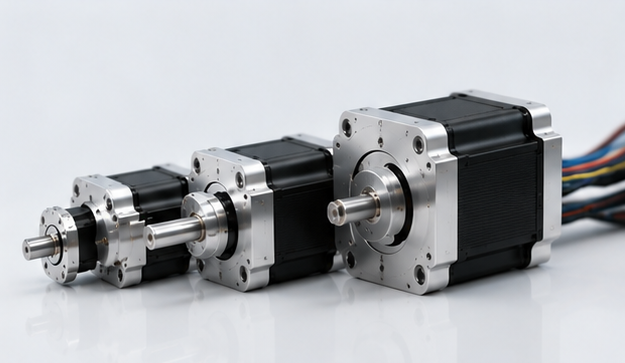
Key Factors When Choosing a Micro Geared Stepper Motor for Humanoid Robots
Selecting the correct motor requires considering several technical parameters.
Torque Requirement
The motor must provide enough torque for the specific robotic joint. Insufficient torque may cause positioning errors or unstable movement.
Gear Ratio
A higher reduction ratio increases torque but reduces speed. Engineers need to balance speed and force according to application requirements.
Backlash
Low backlash is essential for humanoid robots because mechanical clearance can affect movement accuracy.
Noise Level
Humanoid robots often operate near humans. Low-noise motor operation improves user experience.
Size and Weight
A lightweight motor helps reduce robot energy consumption and improves mobility.
Future Development Trends of Micro Geared Stepper Motors in Humanoid Robotics
As humanoid robots move from research laboratories into commercial applications, actuator technology will continue improving.
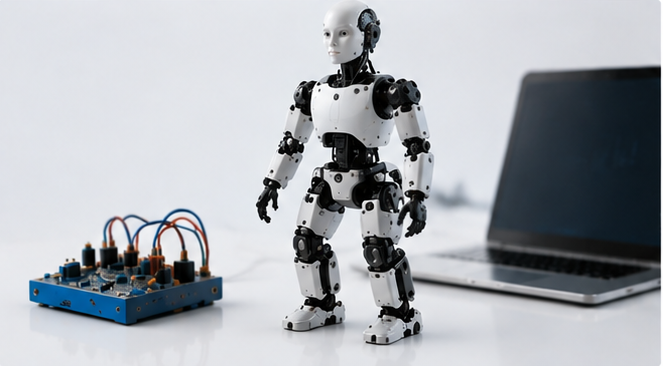
Future micro geared stepper motors are expected to feature:
- Smaller mechanical dimensions
- Higher torque density
- Improved energy efficiency
- Integrated encoders
- Smarter motion control
- Lower noise operation
The combination of artificial intelligence and advanced miniature drive systems will allow humanoid robots to perform increasingly complex tasks in homes, factories, healthcare environments, and service industries.
Conclusion
The micro geared stepper motor is becoming an important motion solution for humanoid robots due to its compact size, precise control, and enhanced torque output. From robotic fingers and wrist joints to facial mechanisms and research platforms, these miniature motors provide the accuracy and reliability required for human-like movement.
As the humanoid robot industry continues to grow, the demand for high-performance micro geared stepper motors will increase. Manufacturers that can provide customized, efficient, and reliable miniature motor solutions will play a key role in shaping the future of intelligent robotics.
For robot designers and engineers, choosing the right micro geared stepper motor is not only about driving movement—it is about creating robots that can interact, adapt, and work alongside humans.